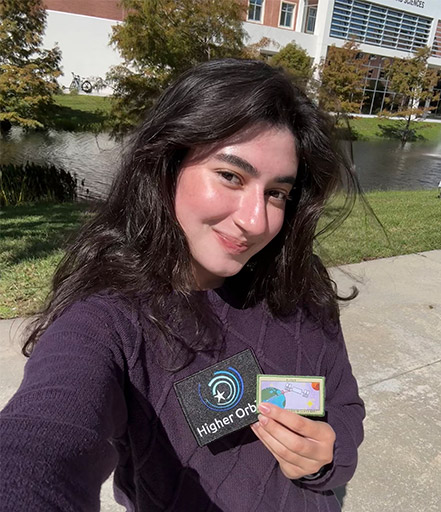
The week leading up to our launch was a paradox, a whirlwind of anxiety, excitement, fear, and pride that words fail to capture. While I knew my team’s research was headed for the International Space Station, the reality felt so surreal that I half-expected someone to reveal it was all an elaborate joke. The idea that, at nineteen, I was sending an experiment into orbit seemed like a dream I was waiting to be woken up from. But the alarm never went off…
On the Friday before launch day, I sat in my chemistry class, though my mind was anywhere but there. The voices of my professors had become a distant hum all week, drowned out by the gravity of the coming days. Before class began, I overheard a group of students discussing the upcoming SpaceX CRS-33 mission. In a rare moment of impulse, I turned around and asked, “Are you talking about CRS-33?”. They nodded, startled. “My team has a payload on that flight,” I told them. Their wide-eyed shock made it sink in… this was actually happening. That brief exchange solidified something profound. It was a stark reminder of how extraordinary this moment was.
In that moment, I also realized how proud my younger self would be. We often get so caught up in reaching for the next big goal, that we forget that our current reality might be the very dream our past self once considered impossible, or in my case, out of this world.
I could not bear to sleep on Friday night. Saturday was a blur of waiting and coordinating with my teammates, our excitement increasing with every passing hour. By evening, a quiet stillness had settled in, and all that was left to do was wait. As I was sipping on some coffee, a photo came through: our payload, being officially handed over for integration. That’s when my emotional wall broke. Tears of joy, relief, and the immense weight of responsibility that I’d been holding back all week finally streamed down. This wasn’t an end, but a beginning. Our experiment was about to commence, collecting data for science that benefits society. And, I had done that.
As the final countdown began, everyone else had gone to bed to get some rest before the launch, but I was planted in front of the screen. After years of dreaming, the moment was finally here; it was all I could think about. The Falcon 9 rocket ignited, painting the night sky with the color of fire, and ambition. It roared as it broke through the atmosphere, in a defiant proclamation of its journey, and then, it vanished.
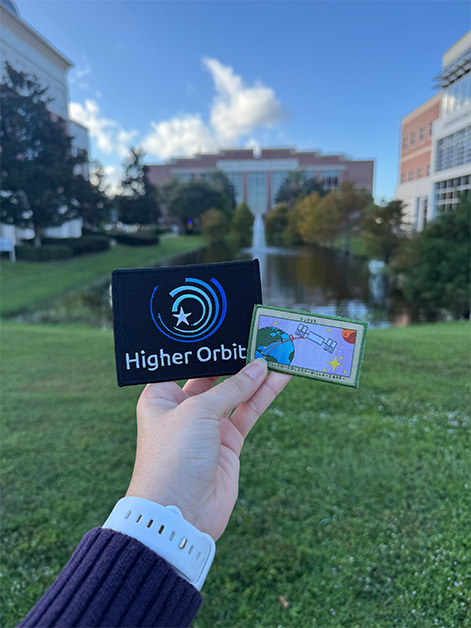
But, as I saw the Falcon 9 ascend, my life flashed before my eyes: my very first science fair; my first research laboratory at Florida Tech; walking through the doors of the KSCVC for “Go For Launch!”; the long hours of working in front of a screen; the moment we were announced as series winners; our first meeting with Space Tango; the creation of our mission patch, our final briefing… and then, BOOM! The thunderous crack of the boosters shook me back to reality; it was my experiment’s final calling before disappearing into the good night!
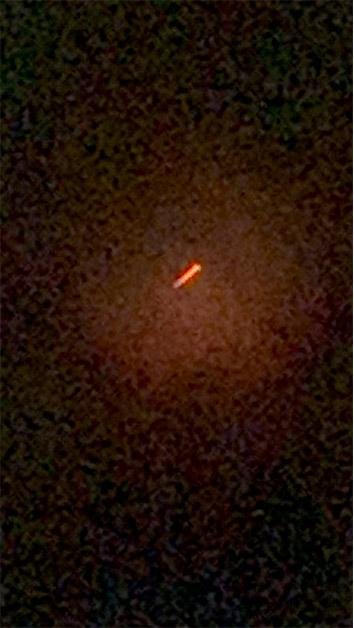
A month later, and we are actively gathering and analyzing data from low earth orbit. Yet, even now, the fact that my research is being conducted on the International Space Station feels beautifully surreal. This experience has fundamentally shifted my perspective on life. If I can send my work out of this world before turning twenty, what can’t I do? Now, when I’m struggling with a difficult engineering problem, or I’m having a rough day, I remind myself to look up at the sky, where my algae are hard at work, a glowing reminder to keep going.
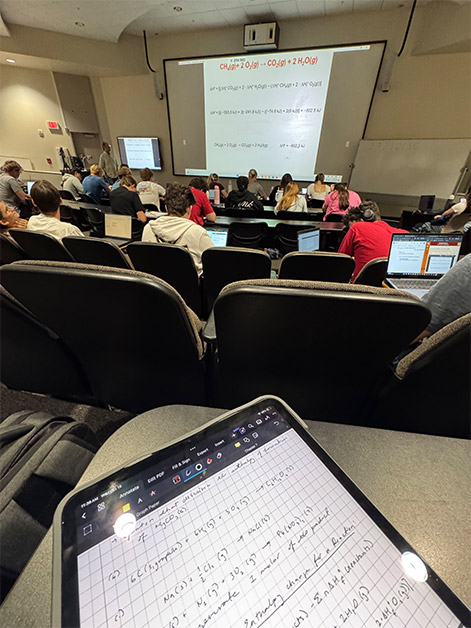
If I’m honest, sometimes I forget it all happened. But, living on the Space Coast, reminders tend to find me. A few days ago, I was back in chemistry class, this time paying attention, and we were learning about enthalpies of formation, the energy changes that occur when molecules are created or transformed. My professor began talking about rocket fuel, explaining how RP-1, rocket-grade kerosene, reacts with LOX, liquid oxygen, to release thousands of kilojoules per mole, just enough to lift tons of metal into orbit. Suddenly, it hit me: that chemistry was part of my story! The very equations on the board, the ones describing how molecules combust to defy gravity, were the ones that had carried my experiment beyond Earth.
That moment made me smile, not just because I love chemistry, but because of how far I’d come. None of it has been a solo flight. Over the past two years, the various steps of my journey with Higher Orbits, like attending conferences, presenting my research in front of industry professionals, and receiving mentorship and support from others, have each contributed to my growth. Each experience has had its own unique energy, but as Hess’s Law reminds us, the total energy change of the reaction is independent of the path taken. The sum of all of these reactions? The thermodynamically stable, purpose-driven individual I’ve become. In my life, Higher Orbits has been the catalyst and provided the environment for those reactions to occur, fueling my dreams in the same way RP-1 fuels the Falcon 9. The collective wisdom and collaboration within this organization has offered me the right conditions for my skills to bond into something far more complex and thermodynamically stable than they ever could alone. Like the enthalpy of formation that determines a rocket fuel’s power, these experiences released the energy that propelled me into higher orbits.
All of this has led me to this incredible place in my life, where I can come home from my engineering classes, log into a database to check on the real-time data of my experiment in space and then get back to my calculus homework.
Until next time,
Valentina.
Written By Stellar Student Valentina Guillen