My passion for space isn’t new, for as long as I can remember, I have been amazed by astronauts, rockets, and pretty much anything related to spaceflight technology. However, the lens through which I explore the idea of space technology certainly has changed. Although I have been fascinated by the space industry since I was little, my scope has evolved to include many themes that had never occurred to me in the past. I’ve always been drawn to the innovation behind spacecraft engineering, the pursuit of discovery through microgravity experimentation, and the breakthroughs in fields like infrared astronomy. These innovations were unmatched in my eyes, and I assumed that more is always better. After all, what could be the downside of more engineering?
As I grew up, I learned that the answer to that question is… a lot. Since I was taught that engineers and scientists gain their best insights through failure, I assumed the method of launch, repeat, launch, repeat was the best practice to yield constant data flow. It never crossed my mind that just one failure could cause a domino effect which would cause technology (now “space junk”) to stay in orbit anywhere from a few months to thousands of years. Similar to litter on the side of the road, it doesn’t take much to realize this is an undesirable outcome. Dissimilar to litter on the side of the road, space junk orbits at an average speed of around 7-8 km/s, meaning that this space “litter” is now moving at around 17,5000 miles per hour.
As an additional concern, this piece of “litter” could be in hundreds of pieces, each experiencing their own orbital velocity, meaning that a collision would have an extremely high impact speed; not to mention the original and resultant debris are likely to be invisible on space tracking systems for current and future missions. This is clearly a recipe for disaster, yet potential space traffic and debris mitigation are often seen as secondary to mission design. Part of this is because space policy is currently still evolving. Space policy brings government and private sector collaboration, national security, and international policy to the forefront of the discussion.
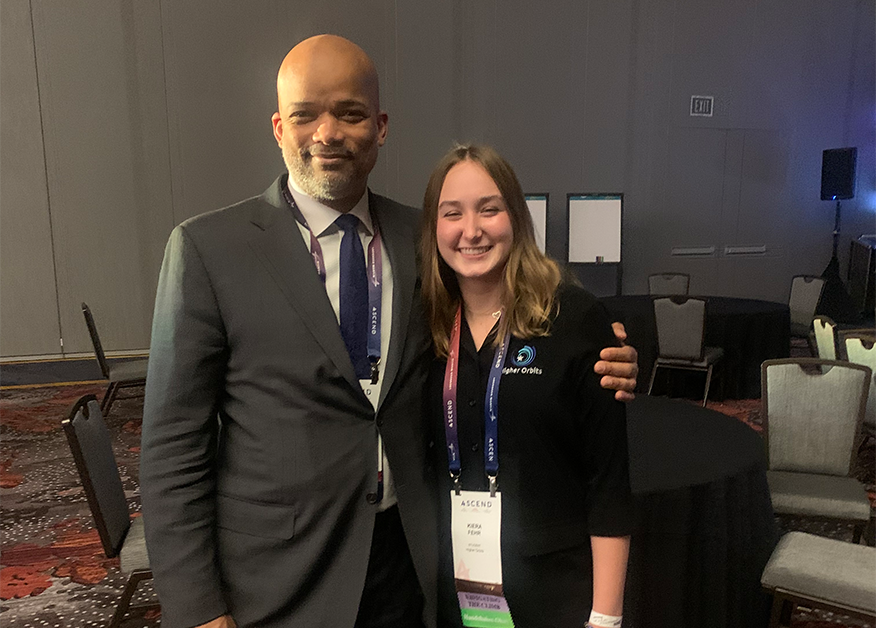
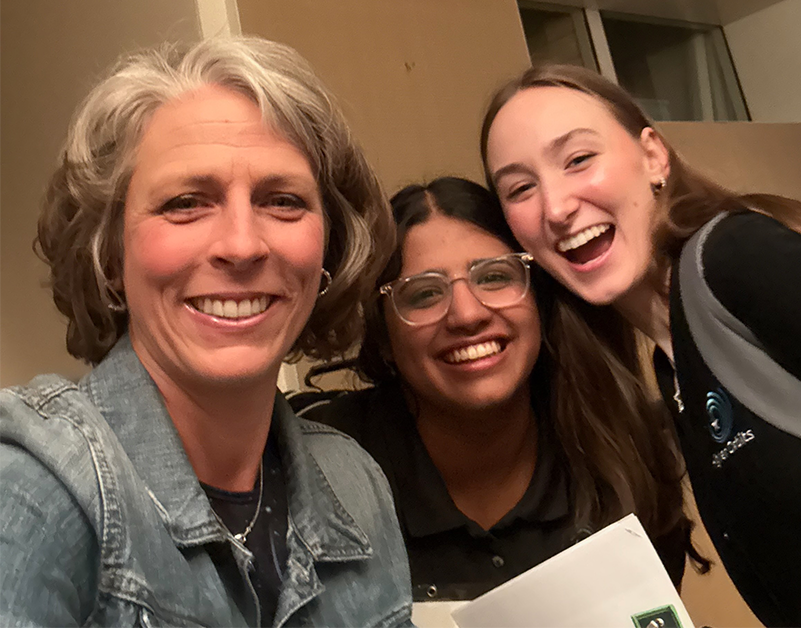
Space innovation isn’t just about launching satellites and developing new technologies, a large part of this innovation is understanding how these technologies will behave over time. This includes how they interact with their environment, how we make decisions about their use, and how we mitigate possible collisions. In fact, I learned much of this background from attending the 2026 Space Traffic Management conference with Higher Orbits this spring (along with another Higher Orbits student that I attended the international Science School with in 2023!).

I’m excited to be attending the Space Policy, Science + Technology Symposium at Purdue University where I will learn from government, military, and industry leaders. The symposium will identify knowledge gaps and define next steps in research, partnerships, and policy development. It’s designed around the idea that no single discipline can solve today’s space challenges alone, and that meaningful progress depends on collaboration across sectors. This year’s theme of addressing space debris as a U.S. national security risk highlights how complex and urgent these challenges have become. The growing density of debris in orbit increases the risk of collisions, threatens critical infrastructure, and introduces uncertainty into a domain that modern society and national security increasingly depend on.
What makes this challenge particularly compelling to me is how directly it connects technical details with policy decisions. Addressing space debris requires understanding how materials degrade, how satellites fragment, and how design and manufacturing choices influence long-term behavior in space. These are fundamental questions of materials science and engineering. The coatings, polymers, composites, and surface interactions all play a role in how spacecraft perform, how they fail, and how debris is created or mitigated. It’s a reminder that policy decisions are only as strong as the technical understanding that supports them.
At the same time, technical insight alone isn’t enough. Addressing the national security risks of space debris requires a combination of sound policy, effective enforcement, technological innovation, and strategic coordination. Improving space-domain awareness, investing in debris mitigation technologies, enhancing maneuverability, and reinforcing international norms are all critical components of this effort. What stands out to me is that each of these areas depends on strong connections between engineering reality and policy decision-making. Without that connection, it becomes much harder to create solutions that are both effective and sustainable in the long term.
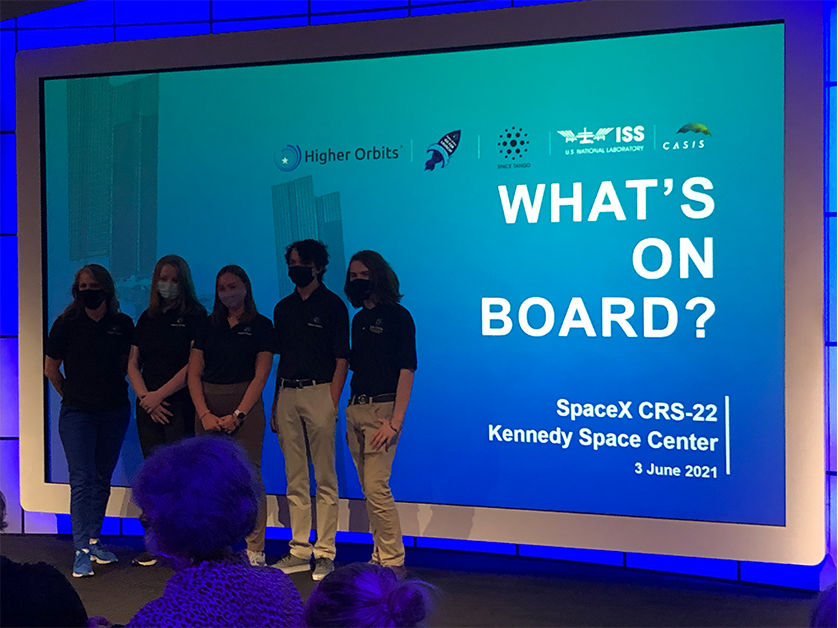
I’m particularly looking forward to engaging with people who approach this challenge from different perspectives. Engineers, policymakers, military operators, and industry leaders each bring different priorities, constraints, and ways of thinking. Understanding how those perspectives interact, align, and diverge is essential for addressing a problem as complex as space debris. Higher Orbits has taught me that even students can contribute to these novel conversations.
As a student in chemical engineering and paper science engineering, understanding materials, analyzing systems, and thinking about sustainability are directly relevant to these challenges in space today. Being part of conversations that connect those technical foundations to policy, strategy, and national security is something I find both exciting and motivating. Ultimately, I’m grateful for the opportunity to take part in a conference that brings together such a wide range of expertise to tackle an issue as complex and consequential as space debris.
Written By Stellar Student Kiera Fehr