
Ever since I was a kid, the night sky felt like a personal invitation. I spent countless evenings with a flashlight in hand, tracing constellations and sketching rockets on the back of notebook paper. Little handheld kits and broken radios became my first laboratories, and I was endlessly fascinated by how something as small as a circuit could control something as massive as a spacecraft. Those early experiments planted the seed of an engineering passion that would grow with each new discovery.
Back home in Charlton, Massachusetts, I enrolled at Bay Path Regional Vocational Technical High School. There, I pursued a dual track: the standard high school diploma and a certification in electronics technology. The curriculum emphasized hands on labs—soldering, circuit design, and troubleshooting real hardware—giving me a practical skill set that complemented my theoretical fascination with space. Working on projects like building a functional clock and debugging boards taught me the patience and precision required for any engineering task.
In the spring of 2018, while still a sophomore at high school, my mom enrolled me into a (at the time) small STEM event that brings together the brightest young minds in space exploration. That event of course being Higher Orbits: Go For Launch! These few days did more than just expose me to STEM; it gave me mentors who treated my questions with the same seriousness as those of graduate students, and a community of peers who shared my excitement. My team’s project—the embryonic development of tardigrades in a spacecraft environment—won the top prize in our event, proving that the ideas I’d been tinkering with could stand shoulder-to-shoulder with professional concepts. That victory was the catalyst that turned a childhood hobby into a concrete career ambition.
Graduating in 2020, I moved to sunny Florida to attend Embry-Riddle Aeronautical University. I entered with a major in astronomy and astrophysics, eager to understand the cosmos from a scientific perspective. However, after a semester spent analyzing stellar spectra, I realized my true curiosity lay in the tools that enable such discoveries. I switched to engineering physics, concentrating on spacecraft instrumentation. This interdisciplinary program let me merge physics, signal processing, and mechanical design—learning how to develop sensors that survive launch stresses, radiation, and the vacuum of space.
During those four years I earned a B.S. in Engineering Physics (2024) with minors in Mathematics, Computer Engineering, and Electrical Engineering. Coursework ranged from quantum mechanics to embedded systems programming, and my senior capstone project involved designing and studying in atmosphere plasma propulsion.
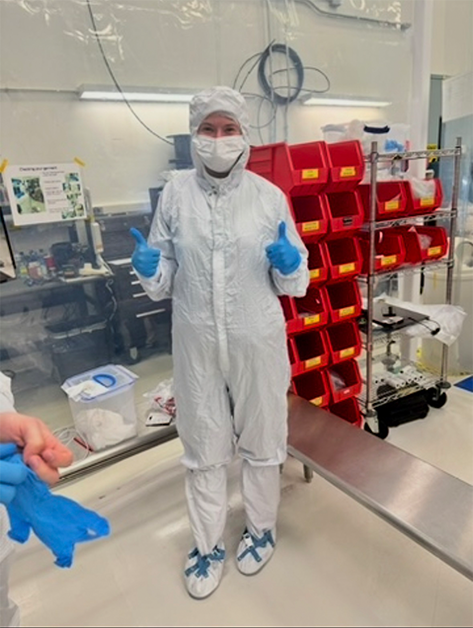
During the summer between my junior and senior year, I secured an internship at NASA Goddard Space Flight Center. I was placed on a team contracted with NASA developing space qualified LiDAR technology for atmospheric profiling. The project quickly expanded to include work on APL’s Project Dragonfly, an initiative to test high-altitude, long-duration unmanned aircraft. My responsibilities grew from data analysis to hardware integration, and the internship was extended through my final semester of college, giving me a seamless transition from academia to applied research.
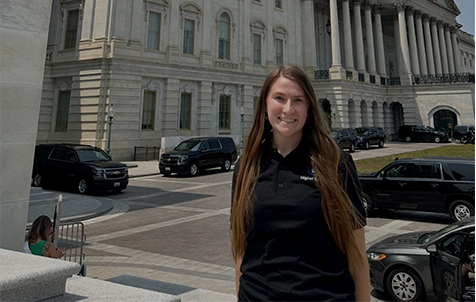
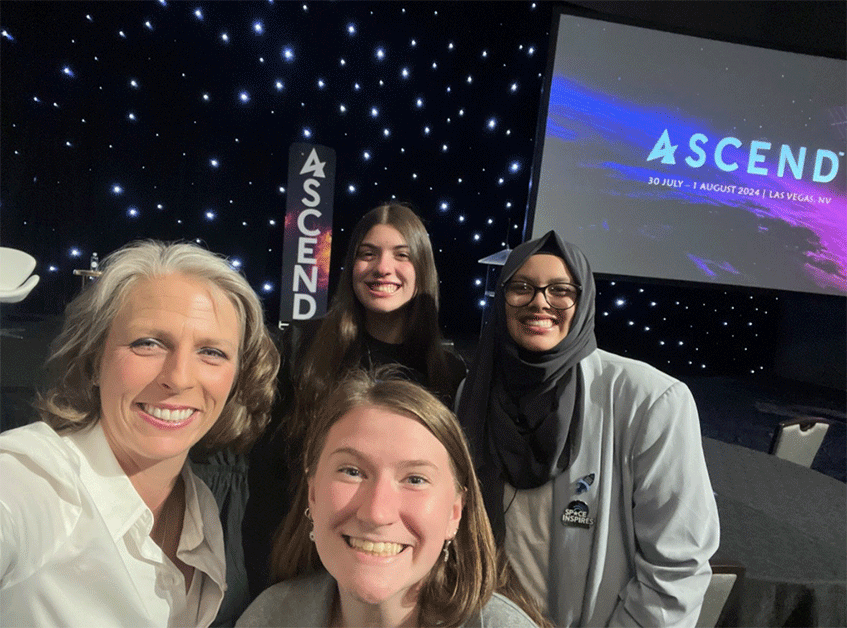
Higher Orbits remained a pivotal part of my network. I attended the ASCEND conference in Las Vegas, where industry leaders discussed the future of reusable launch systems. I also participated in Citizens for Space Exploration hearings on Capitol Hill, advocating for sustained federal investment in deep space missions. These events introduced me to mentors, collaborators, and lifelong friends, expanding my professional “orbit” far beyond the classroom.
After completing my bachelor’s degree, I enrolled in the M.S. program in Computer Engineering at Colorado State University. The curriculum focuses on embedded systems, real time operating systems, and high integrity software—while also getting to take classes in guidance, navigation, and control systems. Skills that are increasingly vital for modern spacecraft where software failure can be catastrophic. Balancing graduate courses with a full-time job keeps me at the cutting edge of both hardware and software development.
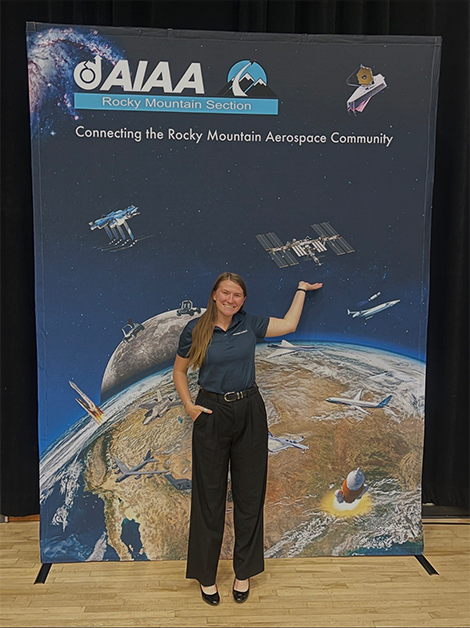
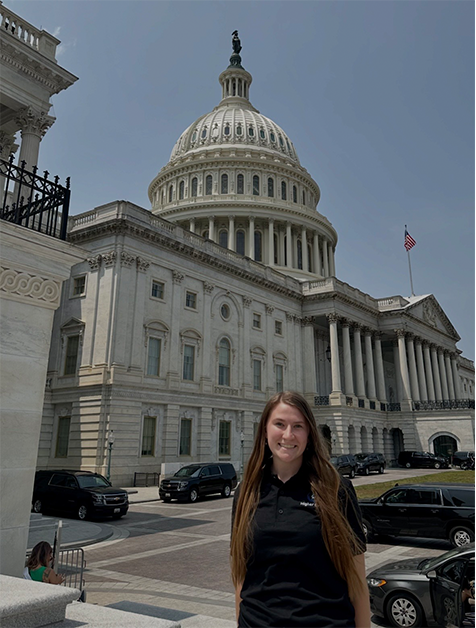
In June 2024 I accepted a fulltime role at Lockheed Martin Space in Littleton, Colorado, starting as a Software Engineer Associate on the National Security Space team. Earlier this year, I transitioned to a Circuit Design Engineer on a ground support team. In this capacity I contribute to several high-profile programs:
● Geo XO – The next generation of geostationary weather satellites that will replace the GOES series, requiring high-precision, radiation-hardened circuitry.
● Conventional Prompt Strike – A rapid response hypersonic missile defense system that demands ultrareliable, low latency electronic subsystems.
Both projects push the envelope of what electronic hardware can achieve in harsh space environments, and they align perfectly with the interdisciplinary foundation built over the previous decade.
Looking back, the thread that connects every chapter—from a flashlight lit backyard to a design desk at Lockheed Martin—is a steadfast curiosity about how things work and a willingness to seek out communities that nurture that curiosity. Higher Orbits: Go For Launch! was more than an event; it was the catalyst that gave me confidence, mentorship, and a network that opened doors to NASA, graduate school, and a career at a leading aerospace contractor.
Written By Kaley Eaton