
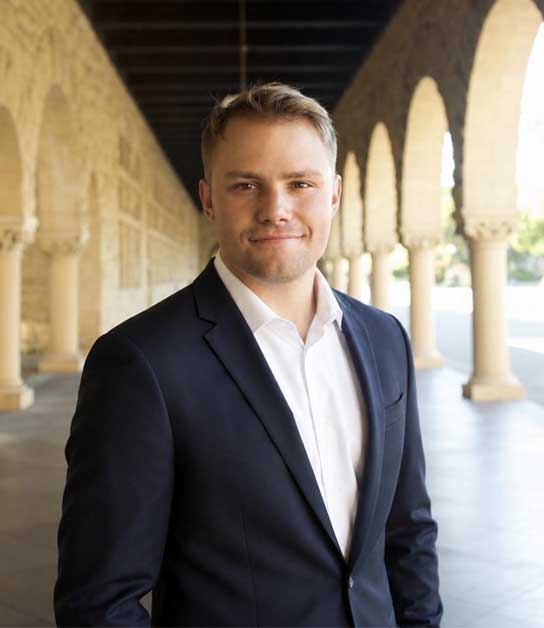
My dad found Higher Orbits on Facebook when I was in 8th grade. He told me it was a space camp, and I lit up! …until he mentioned it was a weekend event at the public library. I'd been picturing the famous Space Camp near Marshall Space Flight Center in Huntsville, Alabama: the simulators, the mission control replicas, the whole thing. A library didn't quite fit that image. I remember being a little confused about what exactly I was walking into.
He took me anyway, and that was one of the best decisions he ever made for me.
I had wanted to be an astronaut since I was five years old. I was obsessed with reading astronaut biographies, attending every space event I could find, learning Russian, getting my SCUBA certification, and learning to code early. My path to space was a well-defined, perfectly optimized checklist. However, what I found in Higher Orbits changed everything for me.
I walked into the event room and saw a crowd of middle and high schoolers, an energetic woman with blonde hair who introduced herself as Michelle Lucas, and a grey-haired man in a flight suit I was too shy to approach. I sat down at a table with a student I recognized from school. Three more joined us. We became Team Orion.
Day 1 was teambuilding and engineering challenges, and day 2 was designing a science experiment. Everyone on Team Orion was fixated on the same problem: radiation. We saw it as one of the biggest obstacles to establishing a human settlement on Mars.
I still can't fully explain how we landed on the idea, but we decided to test whether fungus could attenuate radiation. Our specimen was Cladosporium sphaerospermum, a radiotrophic fungus first documented growing on the walls of Chernobyl. It metabolizes ionizing radiation by synthesizing melanin, which both feeds the organism and shields its DNA. We thought: if something evolved to survive Chernobyl, what could it do in space?
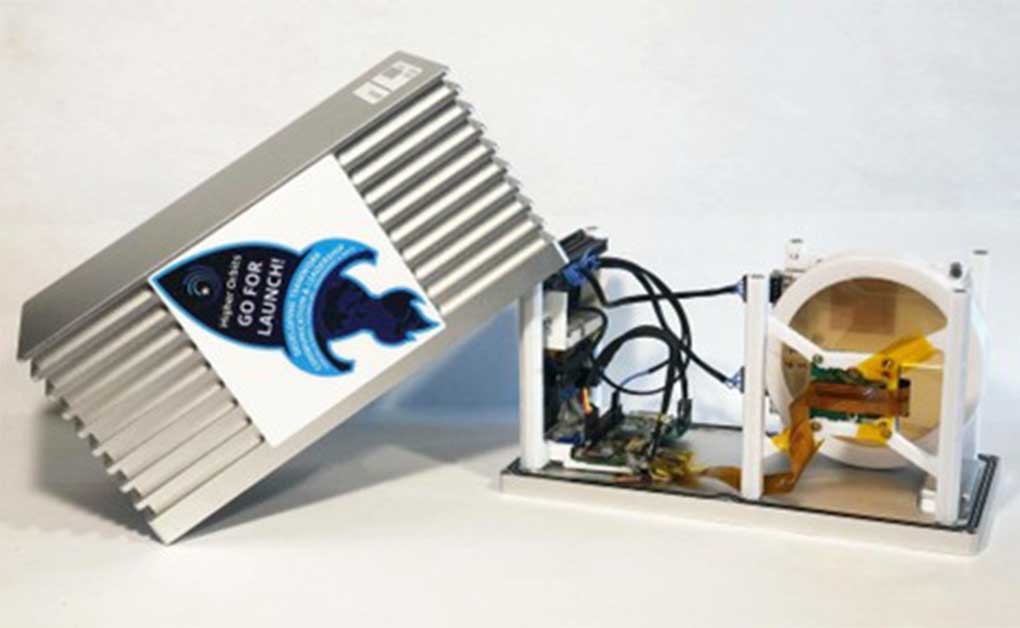
Our experiment was selected as a finalist, then competed against winning designs from other Go For Launch! events across the country. A year later, we got the call: our experiment had been selected to fly to the ISS.
Something I designed. Flying to space! And I was only 17 years old. Never in a million years could I have imagined this.
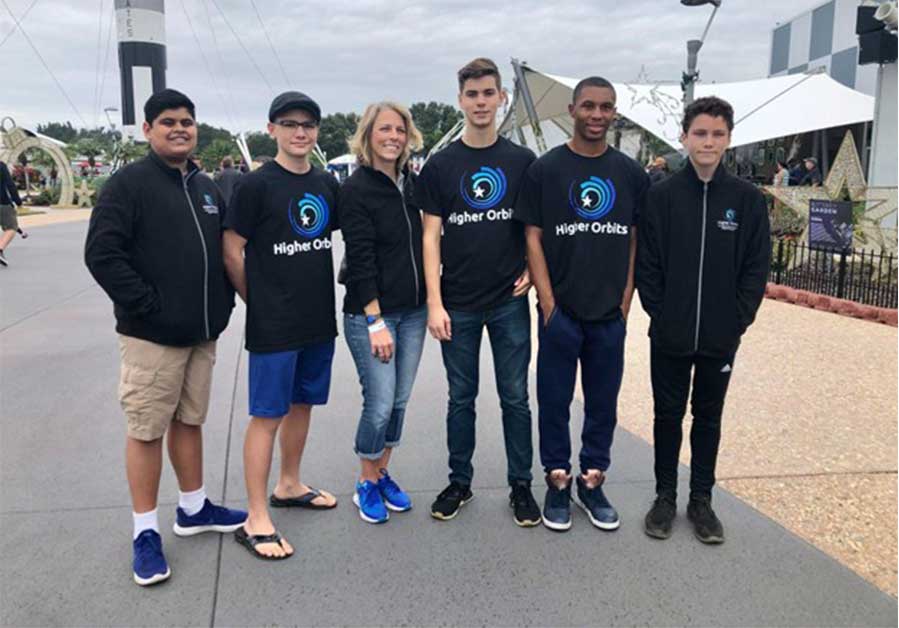
Six months later, Michelle and Team Orion flew to Cape Canaveral to watch our experiment launch on CRS-16, the 16th Falcon 9 resupply mission to the International Space Station. We watched the rocket land, too. I don't have words for what that felt like.
Our experiment spent a month on the ISS, with cameras and Geiger counters collecting data behind petri dishes of Cladosporium growing in microgravity. By the time it returned, we had thousands of data points. I knew we couldn't just let them sit there.
Around that time, I read about a team of Stanford researchers studying whether mycelium blocks could be used to build radiation-protective habitats on Mars. Fungus, radiation, and Mars, all in the same paper. I had to reach out. I cold-emailed Dr. Nils Averesch, a microbiologist with a passion for space biology, and he was genuinely excited by what Team Orion had done. Over the next two and a half years, we worked together analyzing the data and writing up our findings. In 2021, our paper was published in a peer-reviewed journal, proposing that melanized fungi like Cladosporium sphaerospermum could serve as a viable, growable radiation shield on the Martian surface.
I was accepted to Stanford University, and I genuinely don't think that would have happened without Higher Orbits. I completed my BS and MS in Electrical Engineering, focusing on guidance, navigation & control and circuit design. Along the way I interned twice at TransAstra, an asteroid mining startup, and once at Boeing. I'm now starting full-time at Seneca, a company building autonomous drones for wildfire suppression, doing work that I find deeply meaningful in an industry I love.
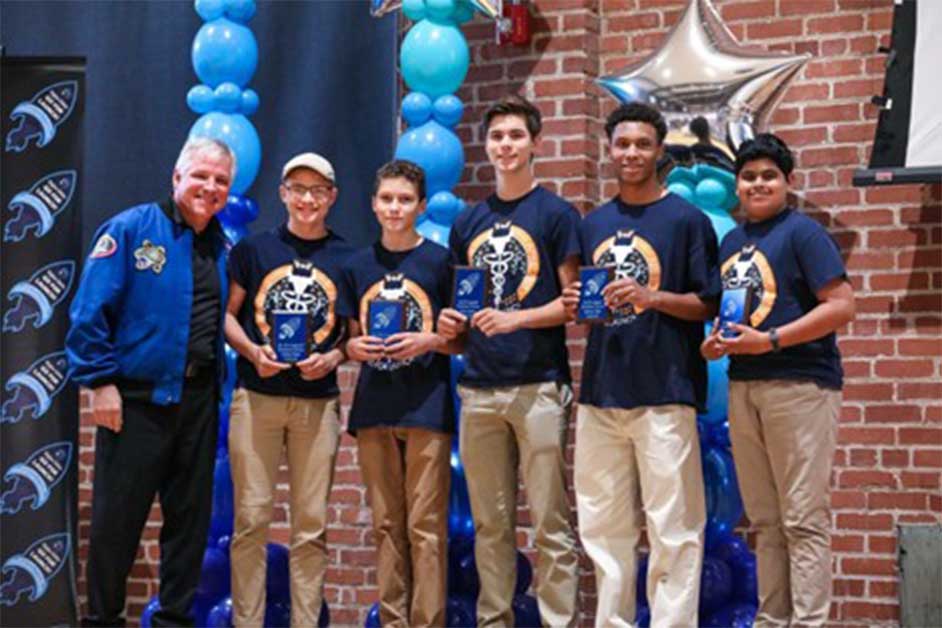
It was also at Go For Launch! that I finally worked up the courage to talk to the man in the flight suit: astronaut Greg "Box" Johnson. I told him about my dream of becoming an astronaut, about the PhD and military pilot routes I had mapped out. He listened, then told me something I've carried ever since: "Master the thing you love doing, and NASA will want you." He also said that chasing a PhD or a military career as a means to an end, without real passion behind it, was a fast track to unhappiness. "That's my two cents," he said. Box and I kept in touch over the following months.
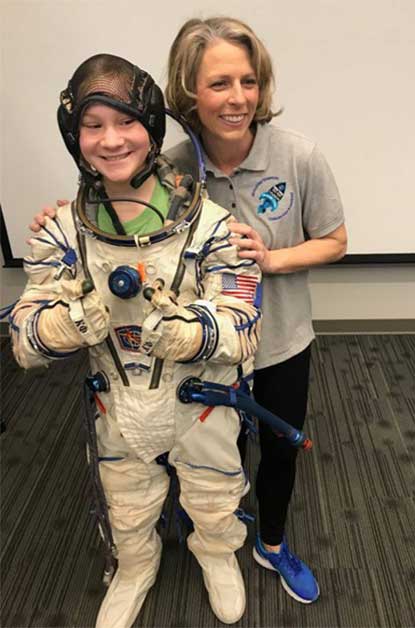
I no longer feel the urgent pull to become an astronaut, and I'm at peace with that. Box was right. Higher Orbits didn't just open doors; it helped me figure out which doors I actually wanted to walk through. It showed me that I wasn't too young to do real science, and that curiosity, when you follow it seriously, has a way of taking you further than any five-year plan.
I attended Go For Launch! three times total. I brought friends. I brought my sisters. I told everyone who would listen. Ten years in, Higher Orbits is still doing what it did for me: finding students who have something burning inside them, and giving that fire a place to go. I'll be attending the 10th anniversary this summer, and I can't wait to meet other students who have been so impacted by the program that changed my life.
Written by Stellar Student Graham Shunk